Field notes / 01
What does bergamot smell like in perfume?
Bergamot sits between familiar citrus references without being identical to any of them. It can suggest a little of lemon’s brightness, orange’s rounded fruitiness and grapefruit’s bitter edge, with a distinctive floral-aromatic softness of its own. The fragrant peel impression is often more useful than imagining a glass of sweet juice.
If you know Earl Grey tea, you have a recognisable reference for bergamot’s aroma. In perfume, however, the result depends on what surrounds it. Herbs can make it feel brisk and aromatic; white flowers emphasise its delicate side; woods or amber give the fresh opening a more substantial destination.
Field notes / 02
A fruit, its peel and the materials behind the note
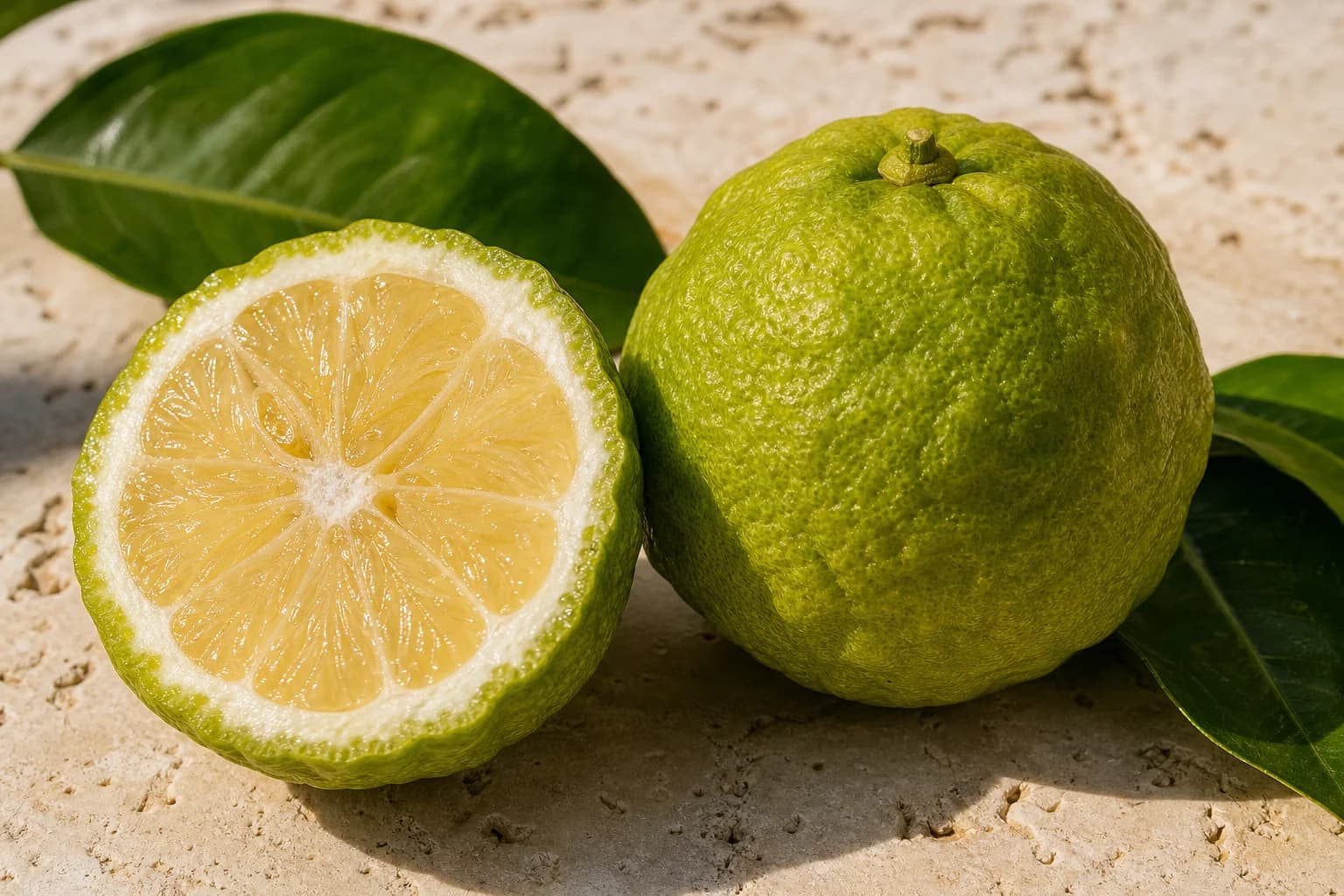
Bergamot is a citrus fruit, commonly associated with Citrus bergamia. Its peel is the source of the familiar aromatic oil. Calabria in southern Italy is strongly associated with its cultivation, but a perfume note does not automatically establish where a particular material was grown.
Perfumery may use natural bergamot oil, specially treated fractions or a reconstructed effect. Certain components in some expressed citrus oils are relevant to phototoxicity, and formulators work within applicable safety limits and material specifications. This is not a reason to apply neat citrus oil to skin: use finished perfume as directed, and consult the maker about a particular formula rather than guessing from its note list.
Field notes / 03
Why perfumers return to bergamot
Bergamot can introduce a composition without dictating everything that follows. Its brightness works in fresh cologne-like structures, aromatic fragrances, florals and rich amber compositions alike. The contrast between a luminous opening and a warmer base is part of the pleasure; the citrus does not need to last unchanged for the whole wear.
In an Australian fragrance wardrobe, bergamot can be a helpful starting point if you enjoy freshness. Do not equate a citrus opening with a light overall perfume, though. Check the heart and base for tobacco, woods, vanilla or resins that may emerge as the initial sparkle settles.