
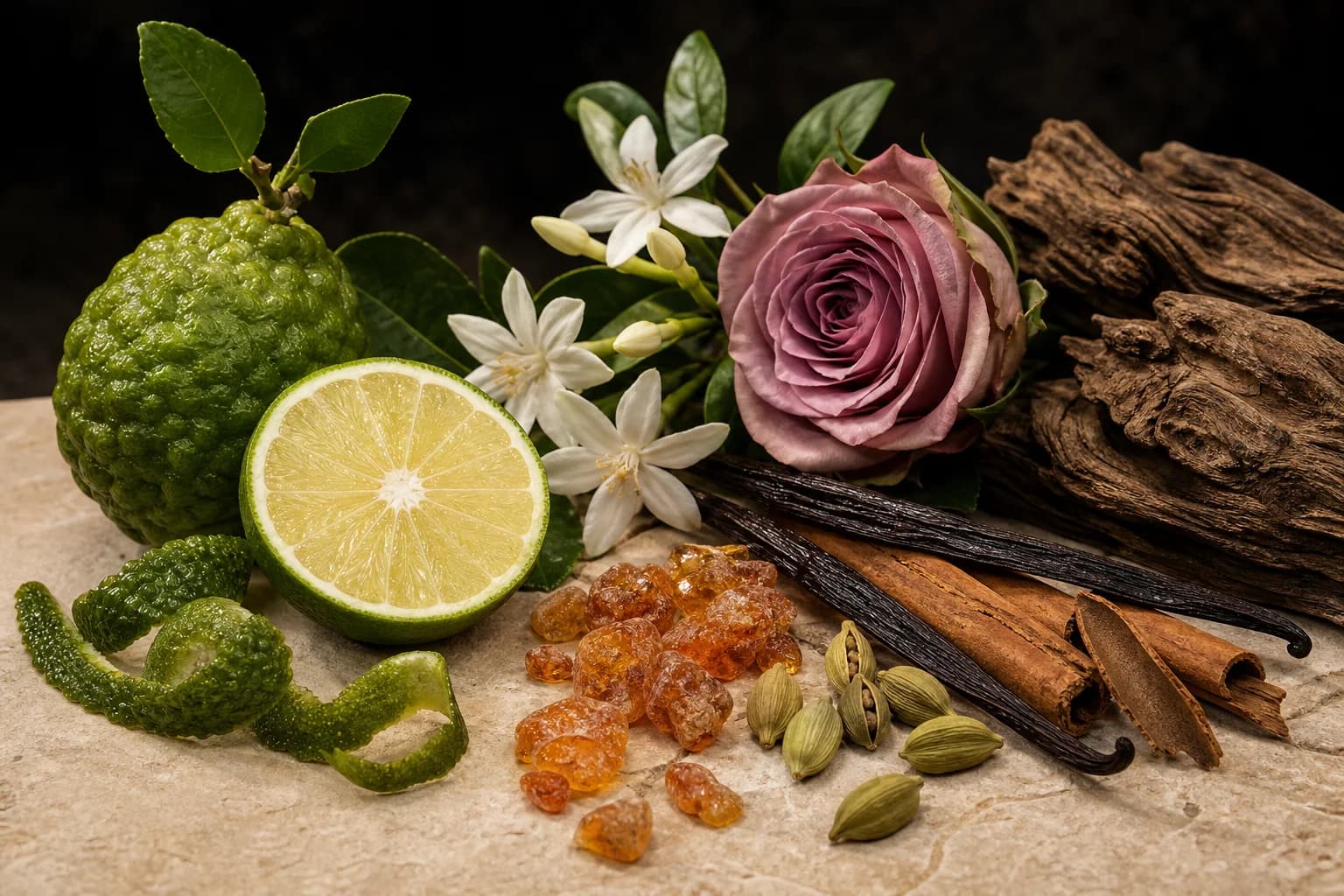
How to Choose a Perfume by Fragrance Notes: A Beginner's Guide
How to Choose a Perfume by Fragrance Notes: The Complete Beginner's Guide
Not sure how to choose a perfume? Learn about top, middle and base notes, fragrance families, scent profiles and how to find a perfume you'll love in Australia.
Bergamot. Amber. Oud. Tonka. Musk. Gourmand. Aromatic. Woody.
A perfume description can sound intriguing without making it particularly clear what you're about to smell.
Is amber sweet? Will a perfume containing vanilla smell like dessert? And why does something that opens with citrus finish with woods?
You don't need a trained nose to make sense of it.
Fragrance descriptions become more useful once you separate three things:
Individual fragrance notes.
The overall scent character or fragrance family.
How the perfume develops after application.
Together, they give you a better starting point than a beautiful bottle or one familiar ingredient.
In this guide, we'll explain perfume notes in plain English, explore common fragrance families and show you how to choose perfume online with more confidence.
We'll also use real fragrance examples from Beautys, an independent Australian perfume brand hand-pouring 50 mL Extrait de Parfum fragrances in Tasmania.
If you want to explore individual ingredients as you read, visit our Fragrance Notes Encyclopedia.
What Are Perfume Notes?
A perfume note is a recognisable smell used to describe a fragrance.
Examples include:
Lemon.
Rose.
Vanilla.
Coffee.
Leather.
Sandalwood.
Smoke.
Bergamot.
Jasmine.
Think of notes as a way to describe the scent experience rather than a shopping list of everything inside the bottle.
A rose note might come from natural materials, other fragrance materials or a combination designed to suggest rose.
A sea note doesn't mean seawater was poured into the perfume.
And an oud note doesn't automatically confirm that natural agarwood oil is present.
A published fragrance note list is not a complete ingredient or allergen declaration. Always refer to the product's ingredient and safety information when needed.
Perfume Notes vs Accords vs Fragrance Families
These three terms are related but describe different things.
Term | What it means | Example |
|---|---|---|
Fragrance note | A recognisable scent impression | Vanilla, bergamot, jasmine |
Accord | Several materials creating a combined scent impression | Amber, leather, sea breeze |
Fragrance family | The overall style or direction | Floral, woody, gourmand |
These categories can overlap.
Vanilla might be one ingredient impression within a complex fragrance, or it might dominate the entire scent profile.
Understanding that difference makes perfume descriptions easier to interpret.
Understanding Top, Middle and Base Notes
Most perfume descriptions organise fragrance notes into a structure known as the fragrance pyramid.
This describes how the scent may develop after application.
<escape>Top Notes → Heart Notes → Base Notes</escape>
However, these aren't three separate compartments that switch on and off.
You can often notice several stages together, and some perfumes change much less than others.
1. Top Notes — The First Impression
Top notes are the impressions that greet you when you first spray a perfume.
Common examples include:
Bergamot.
Lemon.
Grapefruit.
Mandarin.
Fresh fruits.
Aromatic herbs.
Certain spices.
These notes often create brightness, freshness or an immediate sense of energy.
But the opening isn't the whole perfume.
A sparkling citrus introduction can lead into a sweet floral heart or a dry woody base.
Shopping tip: Don't choose a perfume based only on its top notes. Read the entire fragrance pyramid.
2. Heart Notes — The Developing Character
Heart notes, also called middle notes, describe the character that becomes clearer as the opening settles.
Common examples include:
Rose.
Jasmine.
Lavender.
Orange blossom.
Aromatic herbs.
Cinnamon.
Ginger.
Fruits.
The heart often helps define whether a perfume feels floral, spicy, aromatic, sweet or fresh.
For example, a citrus fragrance with a jasmine heart may develop differently from one with aromatic herbs and spices.
3. Base Notes — The Deeper Foundation
Base notes describe the deeper foundation and later dry down.
Common examples include:
Vanilla.
Musk.
Amber.
Sandalwood.
Cedarwood.
Patchouli.
Oud-style accords.
Tonka bean.
These notes can contribute warmth, softness, dryness, sweetness or darker depth.
However, don't assume every base is heavy.
Musk can feel clean and airy, while woods may be dry and understated.
The placement of individual notes can also vary between fragrance descriptions.
Perfume Notes Explained: Quick Reference Chart
Fragrance note | Common scent impression |
|---|---|
Bergamot | Fresh, citrusy, aromatic |
Grapefruit | Bright, zesty, sometimes bitter |
Jasmine | Floral, rich, sometimes creamy |
Rose | Floral, fresh, powdery or rich |
Vanilla | Warm, sweet, creamy or woody |
Tonka bean | Sweet, warm, almond-like |
Amber | Warm, resinous, sometimes sweet |
Musk | Clean, soft, skin-like or powdery |
Sandalwood | Smooth, creamy, woody |
Cedarwood | Dry, clean, woody |
Oud | Dark, woody, resinous or smoky |
Patchouli | Earthy, woody, sometimes sweet |
Ginger | Fresh, spicy, energetic |
Tobacco | Dry, warm, leafy or sweet |
Coffee | Roasted, dark, gourmand |
Caramel | Sweet, buttery, gourmand |
These are general descriptions rather than fixed rules.
An ingredient's effect can change considerably depending on the surrounding composition.
For more detailed explanations, browse the Beautys Fragrance Notes Encyclopedia.
Why Does Perfume Smell Different After 30 Minutes?
Fragrance materials evaporate and become perceptible differently.
As the brightest opening impressions become less prominent, other aspects of the perfume may move forward.
The result might seem:
Softer.
Warmer.
Woodier.
Sweeter.
Less sweet.
More musky.
More floral.
Thirty minutes is a useful moment to check in, not a deadline when every perfume reaches its heart.
Temperature, application and the composition all affect what you notice.
Your own perception can also adapt while you wear a scent.
When testing perfume, notice the first impression, return after it has settled and check again later.
Ask yourself:
Do I enjoy where this fragrance is going?
A perfume with an exciting opening but an unwelcome dry down may be less suitable than one that quietly improves on your skin.
Fragrance Families Explained in Plain English
Fragrance families help describe the overall personality of a perfume.
There isn't one classification system used by every perfume brand.
Some terms are broad families, while others are substyles or prominent accords.
A perfume can be floral, fruity and musky at the same time.
Fresh and Citrus Perfumes
Fresh fragrances often create a crisp, airy or refreshing impression.
Citrus perfumes may feature:
Bergamot.
Grapefruit.
Lemon.
Mandarin.
Orange.
These notes can feel bright, zesty, uplifting or slightly bitter.
Beautys example:
Inspired by Louis Vuitton Symphony, Citrus Crescendo lists grapefruit and bergamot in its opening, ginger in its heart and aromatic woods in its base.
This is an example of how a bright citrus fragrance can develop beyond its opening notes.
You can explore it alongside Modern Serenity in our Louis Vuitton Perfume Dupes Australia guide.
Aquatic Perfumes
Aquatic fragrances evoke watery, breezy or marine impressions.
Some feel cool and clean.
Others suggest salt air, ocean spray or fresh water.
An aquatic note doesn't necessarily mean the perfume contains a natural marine ingredient.
It's a description of the scent effect.
Floral Perfumes
Floral fragrances feature flower-associated notes such as:
Rose.
Jasmine.
Peony.
Orange blossom.
Tuberose.
Lavender.
They can range from light and green to creamy, powdery or rich.
Rose and jasmine, for example, don't create interchangeable effects.
A perfume with one floral note isn't necessarily a predominantly floral fragrance.
Always consider the full scent profile.
Fruity Perfumes
Fruity fragrances can feel juicy, tart, ripe, sparkling or candied.
Examples include:
Pear.
Peach.
Apple.
Berries.
Passion fruit.
Cherry.
A crisp pear fragrance can feel very different from a dark berry or tropical passion fruit composition.
Beautys example:
Inspired by Maison Crivelli Oud Maracuja, Obsidian Passion explores a distinctive contrast between passion fruit and darker oud-style notes.
It shows how fruit can be combined with a deeper fragrance direction.
Aromatic Perfumes
Aromatic fragrances often feature herbal impressions.
Common notes include:
Lavender.
Rosemary.
Sage.
Mint.
Thyme.
They can feel fresh, green, brisk or gently medicinal rather than sweet.
Aromatic notes are particularly common in many fresh masculine fragrance styles, although anyone can enjoy them.
Woody Perfumes
Woody fragrances can suggest:
Dry timber.
Cedarwood.
Creamy sandalwood.
Earthy woods.
Warm polished wood.
Resinous woods.
The difference between cedar-like dryness and sandalwood-like creaminess can be considerable.
Woods paired with citrus may feel brisk and fresh.
Woods paired with vanilla can feel warmer.
Woods combined with smoke or leather may create a darker character.
Amber Perfumes
Amber in perfumery usually refers to a warm, rounded scent impression.
It can feel:
Resinous.
Balsamic.
Sweet.
Powdery.
Woody.
Vanilla-like.
Traditional amber-style accords often combine warm balsamic and vanilla-like effects.
The word doesn't simply refer to the smell of fossilised amber jewellery.
Spicy Perfumes
Spicy fragrances can be divided into different scent directions.
Fresh spicy notes may include ginger or pepper.
Warm spicy notes may include cinnamon, clove or cardamom.
These can create very different experiences.
For example, ginger with citrus can feel energetic, while cinnamon with vanilla may feel warm and comforting.
Oud Perfumes
Oud is associated with agarwood and can suggest a dark, resinous, smoky, leathery or earthy scent character.
However, modern oud-style fragrances vary considerably.
Some are smooth and approachable.
Others are intentionally intense.
Beautys example:
For a detailed explanation, read our What Does Oud Smell Like? Complete Guide.
Gourmand Perfumes
Gourmand fragrances are inspired by food-like aromas.
Common notes include:
Vanilla.
Caramel.
Coffee.
Chocolate.
Praline.
Brown sugar.
Honey.
Not every gourmand perfume smells like dessert.
Some are dark, bitter, toasted or woody.
Beautys example:
Inspired by Giardini di Toscana Bianco Latte, Velvet Latte explores a creamy caramel-and-vanilla gourmand direction.
Explore more styles in our Best Vanilla Perfumes Australia guide.
Musky Perfumes
Musk can describe several different scent impressions.
It may feel:
Soft.
Skin-like.
Clean.
Powdery.
Warm.
Laundry-like.
A clean musk isn't automatically citrusy.
And a musky perfume isn't necessarily heavy or animalic.
The other notes determine the overall effect.
How to Choose Perfume Online: A Practical Step-by-Step Method
Shopping for perfume online can feel difficult because you can't smell a fragrance through a screen.
However, reading notes systematically can help you make a more informed choice.
Step 1: Start With Smells You Already Enjoy
Think about perfumes you like or familiar smells you enjoy.
For example:
Fresh citrus peel.
Coffee.
Vanilla.
A florist's shop.
Warm timber.
Clean laundry.
Fresh herbs.
Sweet caramel.
Write down two or three favourites.
Also note what you dislike.
"Sweet, but not syrupy" is more useful than simply saying you want a nice perfume.
Step 2: Read the Scent Profile Before the Notes
The overall scent profile tells you whether a perfume is mainly:
Fresh.
Floral.
Fruity.
Woody.
Sweet.
Spicy.
Gourmand.
Aromatic.
Use that information to establish the general direction.
Then read the notes to understand the details.
A perfume containing rose isn't necessarily predominantly floral.
Step 3: Look for Combinations
One favourite note can't guarantee that you'll enjoy the whole fragrance.
Vanilla with caramel can suggest something very different from vanilla with woods and spices.
Citrus with aquatic notes may feel breezy.
Citrus with resinous woods may have more depth.
The combinations matter more than a single ingredient.
Step 4: Read the Entire Fragrance Pyramid
Imagine the journey from opening to dry down.
If you enjoy freshness but dislike smoky woods, don't let a lemon top note distract you from a smoky base.
If you enjoy gentle sweetness, check whether sugar-like notes are balanced by woods, herbs or musk.
Step 5: Keep Concentration Separate From Character
Extrait de Parfum describes a concentration style.
It doesn't tell you whether a perfume smells sweet, sophisticated, fresh or powerful.
Beautys fragrances are formulated at 30% Extrait de Parfum concentration, but each fragrance still has its own scent character.
Our Extrait de Parfum vs Eau de Parfum guide explains this distinction in more detail.
Step 6: Build a Shortlist
Compare two or three fragrances using the same questions:
What is the main scent direction?
How sweet is it described as being?
Which notes appear in the base?
Are there ingredients or accords I usually dislike?
Does the fragrance suit the occasion I have in mind?
Read customer reviews where available, remembering that fragrance experiences are subjective.
Sample on skin when sampling is available.
Descriptions reduce uncertainty rather than remove it.
Find a Perfume That Suits Your Taste
Here are some practical starting points using Beautys fragrances.
If You Like Sweet Perfumes
Look for vanilla, caramel, brown sugar, tonka, honey or ripe fruit.
Decide whether you prefer sugary brightness, creamy softness or darker sweetness.
Inspired by Kayali Vanilla 28, 420 Vanilla lists vanilla orchid and jasmine in its top notes, brown sugar and tonka bean in its heart, and amber, amberwood, musk and patchouli in its base.
That combination shows why a sweet fragrance can also contain floral and woody character.
Velvet Latte explores a creamy caramel-and-vanilla gourmand direction.
For more examples, read our Best Vanilla Perfumes Australia guide.
If You Like Fresh Perfumes
Look for citrus, green, aromatic or aquatic descriptions.
Then check how they develop.
Inspired by Louis Vuitton Imagination, Modern Serenity explores citrus, ginger, tea and warm woods.
Inspired by Louis Vuitton Symphony, Citrus Crescendo features grapefruit, bergamot, ginger and aromatic woods.
These two fragrances illustrate how fresh perfumes can have very different personalities.
If You Like Dark or Rich Perfumes
Explore amber, tobacco, oud, incense, cacao, leather-like accords and warm spices.
Inspired by Tom Ford Tobacco Vanille, Sweet Smoke lists tobacco leaf and spicy notes in its opening; vanilla, cacao, tonka bean and tobacco blossom in its heart; and dried fruits and woody notes in its base.
Inspired by Oud Maracuja, Obsidian Passion explores a fruity contrast with darker oud-style notes.
If You Like Clean Perfumes
Look for soft musk, airy florals, aquatic accords and fresh aromatic notes.
Decide what clean means to you:
Soapy.
Laundry-like.
Watery.
Crisp.
Soft and skin-like.
These directions can smell very different despite all being described as clean.
If You Like Woody Perfumes
Compare dry cedar-like character, creamy sandalwood-style warmth and darker resinous woods.
Inspired by Le Labo Santal 33, 33 Solara explores a woody fragrance direction associated with sandalwood and other dry, aromatic notes.
How Australian Weather Can Affect Your Perfume Choice
A hot, humid afternoon and a cool Tasmanian evening are different settings for the same perfume.
Heat can make a fragrance seem more noticeable or change how quickly its opening develops.
Some people prefer citrus, aquatic or aromatic styles in warm weather.
Others enjoy richer amber, woody or gourmand profiles when it's cooler.
But these are preferences, not seasonal rules.
You can enjoy vanilla in summer or citrus in winter.
Consider:
Temperature.
Humidity.
Indoor or outdoor use.
Air-conditioned environments.
The amount you apply.
The comfort of people around you.
A lighter application may suit a close setting better than changing fragrance families entirely.
For more advice, explore our Long-Lasting Extrait Perfumes Australia guide.
Does Perfume Smell the Same on Everyone?
Not exactly.
Skin condition, temperature, application, other scented products and surroundings can affect the fragrance experience.
Perception matters too.
Two people may notice different parts of the same perfume, and your nose can become less aware of a fragrance you've been wearing for a while.
This is one reason a paper test strip, a friend's recommendation and your own skin may give different impressions.
When you can test a fragrance:
Apply a consistent amount.
Avoid strongly scented products that may interfere.
Notice the opening.
Revisit the scent after it settles.
Check whether you still enjoy the dry down.
Rather than asking only how long a perfume lasts, consider whether you enjoy its full development.
Are Expensive Perfumes Better Than Affordable Perfumes?
Price alone doesn't tell you whether you'll enjoy a fragrance.
Retail pricing can reflect many factors, including:
Ingredients and formulation.
Packaging.
Branding.
Marketing.
Distribution.
Retail costs.
An expensive perfume isn't automatically a better match for your preferences.
Similarly, an affordable inspired fragrance isn't necessarily identical to the designer perfume that inspired it.
The most useful approach is to compare the scent direction, fragrance notes and your own preferences.
Read our Perfume Dupes Australia guide to understand how designer-inspired fragrances compare.
You can also explore Why Does Perfume Cost So Much? for a deeper explanation of fragrance pricing.
How to Use the Beautys Fragrance Notes Encyclopedia
If you encounter an unfamiliar note while shopping, the Beautys Fragrance Notes Encyclopedia is designed to help you understand its scent character.
For example, you might want to know:
What does bergamot smell like?
Is amber sweet?
What does tonka bean smell like?
Is oud always smoky?
What is the difference between sandalwood and cedarwood?
Why do perfumes contain musk?
What does gourmand mean?
Use the encyclopedia to understand individual notes, then return to the perfume's complete scent profile.
The key is understanding how the notes work together, not simply collecting a list of ingredients you like.
Explore the Fragrance Notes Encyclopedia →
Why Choose Beautys When Exploring New Fragrances?
Beautys is an independent Australian fragrance brand based in Tasmania.
Our perfumes are hand-poured in Launceston and offered in 50 mL Extrait de Parfum at 30% fragrance concentration.
Our eligible fragrances are priced at:
A$35 each.
Any 3 for A$90.
Any 6 for A$180.
Any 9 for A$270.
Any 12 for A$360.
The offer repeats for additional complete groups of three.
That makes it possible to explore several different scent families, from fresh citrus to warm vanilla, woody aromatics and bold oud-inspired fragrances.
You might choose one familiar scent direction, one you've been curious about and one that suits a different occasion.
Explore the Complete Beautys Fragrance Collection →
Frequently Asked Questions About Perfume Notes
What Are the Three Types of Perfume Notes?
Top, heart or middle, and base notes. They describe the opening, developing character and deeper foundation. The stages overlap rather than arriving as three completely separate scents.
What Is the Difference Between Top, Middle and Base Notes?
Top notes introduce the fragrance, heart notes help shape its developing character, and base notes contribute depth and the later dry down.
Which Perfume Notes Last the Longest?
Many woody, musky and resinous materials can remain noticeable longer than bright citrus impressions. However, a note name alone can't predict exact wear time.
What Does Dry Down Mean in Perfume?
The dry down is the later fragrance character after the opening has settled. Woods, musk, amber or vanilla may become easier to notice, although every perfume develops differently.
How Do I Know Which Fragrance Family I Like?
Compare several perfumes you already enjoy and look for recurring scent directions. You may discover that you prefer combinations, such as fresh woods or musky florals, rather than one family alone.
How Can I Choose Perfume Without Smelling It First?
Compare the overall scent profile, full note pyramid and product description with fragrances you already know. Read varied reviews and sample where possible.
What Does Gourmand Mean in Perfume?
Gourmand describes food-inspired fragrance impressions such as vanilla, caramel, chocolate, coffee or praline. Some are sweet and creamy, while others are darker or more toasted.
What Does Amber Smell Like?
Amber usually suggests rounded warmth, often sweet, balsamic or resinous. Different amber accords can also feel powdery, woody or vanilla-like.
What Does Oud Smell Like?
Oud can suggest deep wood, resin, smoke, leather or earthy richness. Read our complete oud perfume guide for more information.
Does Extrait de Parfum Mean a Fragrance Will Last Longer?
Not necessarily. Concentration is only one factor affecting fragrance performance. The complete formula, application and wearing conditions also matter.
Your Next Perfume: Read the Whole Story
The most useful question isn't:
Does this perfume contain a note I like?
It's:
Do I like the direction these notes create together?
Start with the fragrance family.
Follow the opening through the heart into the base.
Compare the complete scent profile with your own preferences.
And remember that fragrance is personal.
At Beautys, we offer a variety of independently branded designer-inspired fragrances, hand-poured in Tasmania, Australia.
Whether you're searching for a fresh citrus scent, warm vanilla, modern woods or a bold oud-inspired fragrance, understanding perfume notes can help you make a more informed choice.
50 mL Extrait de Parfum at 30% concentration — A$35 each or any three eligible perfumes for A$90.
Browse the Fragrance Notes Encyclopedia →
Read the Perfume Dupes Australia Guide →
Beautys — Affordable Luxury, Hand-Poured in Tasmania.
Beautys is an independent Australian fragrance brand. References to designer fragrances describe scent inspiration only and do not imply affiliation with or endorsement by the designer brands mentioned. All trademarks belong to their respective owners.
Written by Beautys